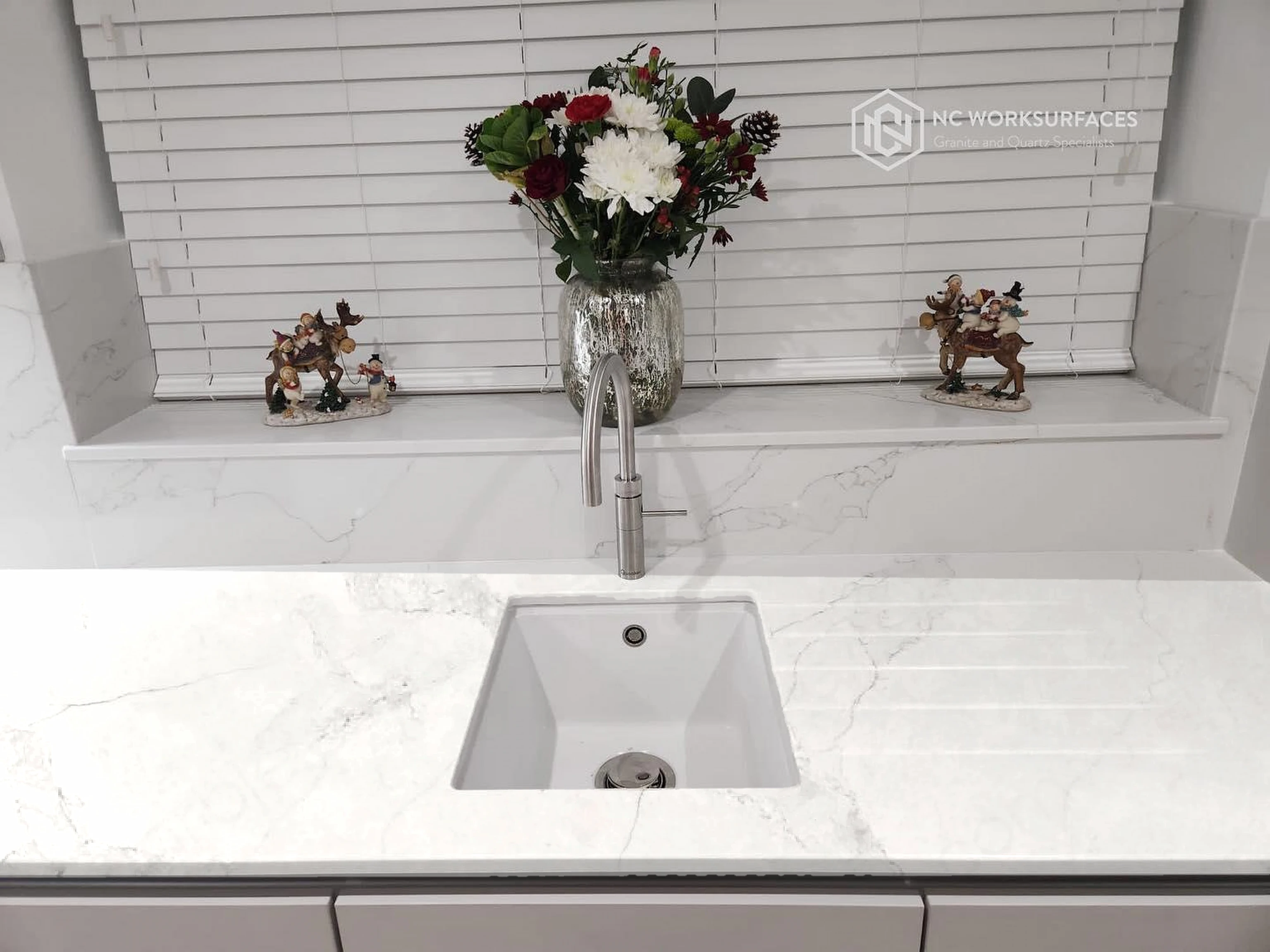
Choosing a material
Granite vs quartz vs porcelain worktops — which is right for you?
The three most popular worktop materials compared on looks, durability, maintenance and where each works best — in plain English, with no hype.
Granite, quartz and porcelain are the three worktops most people end up choosing between. They can look similar in a showroom, but they behave quite differently once they are in your kitchen. Here is the honest version, without the sales gloss.
Granite — natural stone, real character
Granite is quarried natural stone, so every slab is genuinely one of a kind. That is its biggest appeal: you are not getting a pattern that is repeated in thousands of other kitchens. It is very hard and copes well with day-to-day cooking.
The trade-off is that granite is porous. It is sealed when it is fitted and needs resealing from time to time to keep it resisting water and stains. That is a quick job you can do yourself, but it is a job — so granite suits people who do not mind a little upkeep in exchange for natural beauty.
Granite is most at home in kitchens that want warmth and individuality, and in darker schemes where its depth and flecking really show.
Quartz — engineered, low-maintenance, consistent
Quartz is an engineered surface: roughly 90–95% crushed natural quartz bound with around 5–10% resin and pigment (Mayfair Worktops). Because it is manufactured, the colour and pattern are consistent — useful if you want a precise marble-effect look across a long run or an island.
It is non-porous, so it does not need sealing and shrugs off most everyday spills. The thing to remember is the resin: quartz does not like high heat (always use a trivet) and is not designed for prolonged direct sunlight, which is why standard quartz is an indoor material.
Quartz suits busy family kitchens that want a clean, modern, low-fuss surface — especially in pale marble-look designs that would be high-maintenance in real marble.
Porcelain — the tough, heat-proof newcomer
Porcelain is a fired ceramic slab. It is non-porous (no sealing), extremely heat resistant so you can generally set a hot pan straight on it, and UV-stable so it does not fade in sunlight (Rock & Co, Beau Bijou). That combination is why porcelain is the go-to for outdoor kitchens and for anyone who genuinely cooks hard.
Porcelain slabs are thinner than stone, so a chunky worktop is built up with a mitred edge. The pattern is printed and runs on the surface, so it reads slightly flatter than the through-body depth of natural granite — something worth seeing in person.
A quick way to choose
- You want natural, one-of-a-kind stone and don’t mind sealing → granite
- You want low maintenance and a precise, consistent look → quartz
- You want maximum heat resistance, or an outdoor kitchen → porcelain
There is no single “best” — only the best for how you use your kitchen. Prices vary widely by material, colour and thickness; we keep figures out of this guide on purpose and confirm a firm price only after a survey. See our separate cost guide for indicative ranges.
The fastest way to settle it is to look at real slabs in a real room rather than a tiny showroom sample. Try a few side by side below.
Frequently asked questions
- Which is the most hard-wearing — granite, quartz or porcelain?
- All three are very durable for everyday kitchen use. Porcelain is the most heat- and UV-resistant and is non-porous; quartz is hard and non-porous but its resin binder is sensitive to high heat and strong UV; granite is a natural stone that is very hard but porous, so it needs sealing. The "best" depends on how you use the kitchen.
- Do quartz worktops stain?
- Quartz is non-porous, so it resists staining far better than unsealed natural stone. It is not stain-proof — wipe up spills like wine, turmeric or oil promptly, and avoid leaving harsh chemicals on the surface, as these can affect the resin over time.
- Does granite need sealing?
- Yes. Granite is a porous natural stone, so it is sealed on installation and should be resealed periodically. How often depends on the specific granite and how heavily it is used — see our granite care guide for a simple water test that tells you when it is due.
- Can I put a hot pan straight onto the worktop?
- On porcelain, generally yes — it has very high heat resistance. On quartz, no — the resin can scorch or discolour, so always use a trivet. On granite, brief contact is usually fine, but a trivet is still the safe habit for all materials.
Sources
Figures and material facts below are drawn from the sources listed. Any prices are indicative only and are confirmed after a site survey.