Care & maintenance
How to care for and clean a quartz worktop
Quartz is one of the easiest worktops to live with — if you know the few things to avoid. Here is the simple daily routine and the short list of things that can damage it.
Quartz is popular precisely because it is easy to live with. It is non-porous, so it does not need sealing and shrugs off most everyday spills. The catch is that the resin which binds it has a couple of weaknesses — and once you know them, looking after quartz takes seconds a day.
The daily routine
For everyday cleaning you need almost nothing:
- Wipe the surface with a soft damp cloth or microfibre.
- For grease or sticky marks, add a little mild washing-up liquid in warm water.
- Dry it off with a clean cloth to avoid streaks.
That’s it (Kitchen Warehouse). The single most useful habit is to wipe up spills promptly — wine, coffee, turmeric, oil — rather than leaving them to sit. Quartz resists staining far better than unsealed stone, but it is not invincible.
What to avoid
This short list is what protects a quartz worktop for the long term:
- No bleach or ammonia. These can break down the resin and dull or discolour the finish (Worktop Warehouse).
- No abrasive pads or scouring creams. They scratch the surface and take the sheen off.
- No strong solvents — nail-varnish remover, paint stripper and similar can damage the resin.
- Go easy on vinegar. It is acidic; if you use it, dilute it well and never leave it sitting. For routine work, mild soap and water is the safer choice.
Heat and knives
Two more habits matter:
- Always use a trivet for hot pans, trays and appliances. Quartz does not like high heat — the resin can scorch or discolour (Stone Connection). This is the most common avoidable damage we see.
- Cut on a board. Quartz is very hard, but it is not scratch-proof, and you’ll blunt your knives anyway.
Dealing with a stubborn mark
For a dried-on spill, lay a warm damp cloth over it for a few minutes to soften it, then wipe with mild soapy water. Avoid the temptation to reach for something stronger or to scrub with an abrasive — that usually does more harm than the mark itself.
If the finish has gone dull
A dull patch is almost always one of two things: an abrasive pad or harsh chemical has worn the surface, or there is a film of dried cleaning-product residue. Switch to mild soap and water, dry thoroughly, and stop using anything abrasive. If a genuine matt patch has formed from chemical damage, your fabricator is the right person to advise — don’t experiment with polishes.
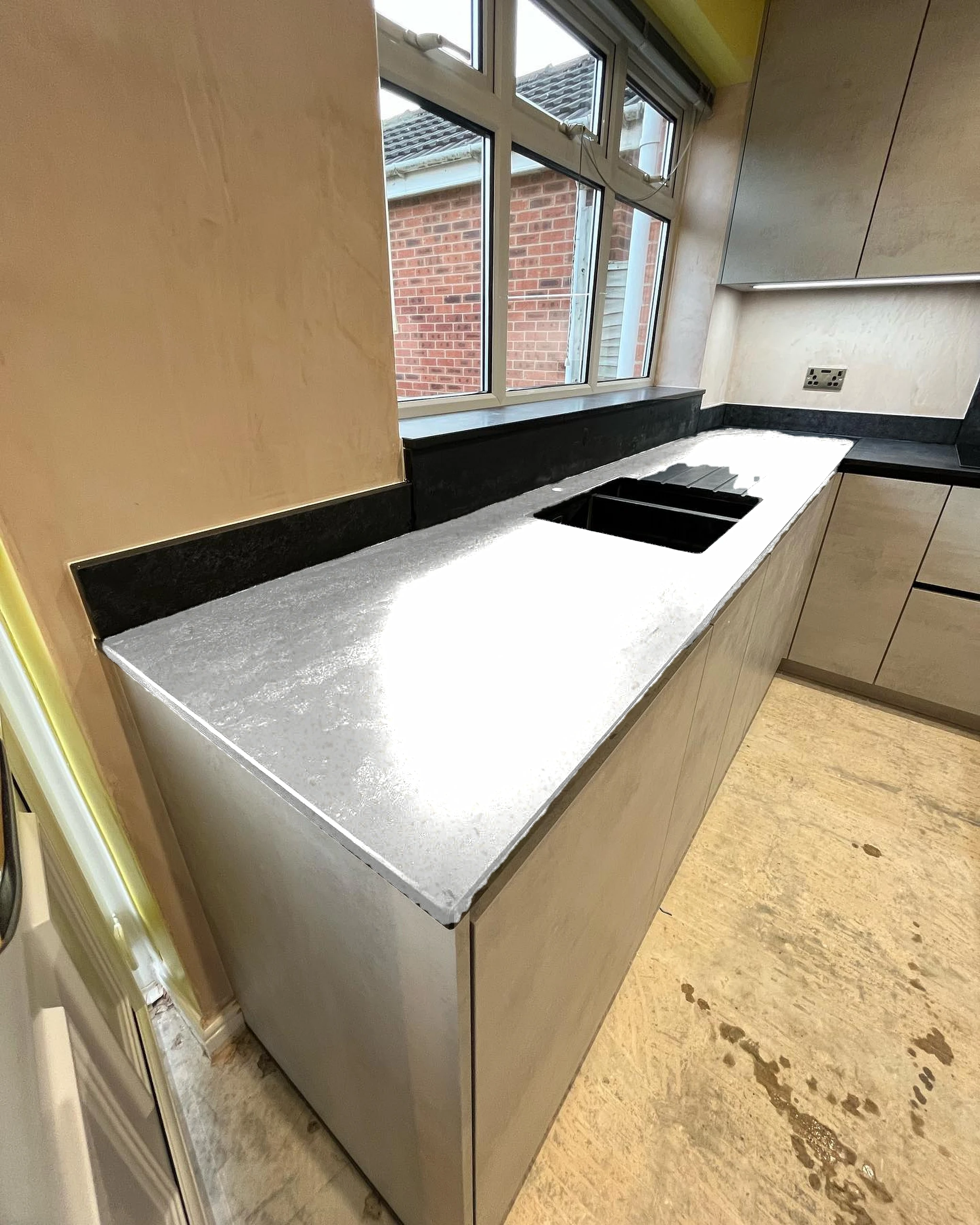
Quartz rewards a light touch. Treat it gently and it will look as good in ten years as it did on day one. If you’re still deciding on a colour, see how different quartz shades read in a real kitchen below.
Frequently asked questions
- What is the best everyday way to clean a quartz worktop?
- A soft damp cloth or microfibre with a little mild washing-up liquid in warm water. Wipe over, then dry with a clean cloth. Deal with spills promptly. That is genuinely all most quartz needs day to day.
- Can you use vinegar or bleach on quartz?
- Avoid bleach and ammonia — they can break down the resin binder and dull or discolour the surface. Vinegar is acidic, so use it only well diluted in water, if at all, and never leave it sitting. For routine cleaning, mild soap and water is safer and works just as well.
- Can I put hot pans on a quartz worktop?
- No — always use a trivet or heat pad. Quartz is made with a resin binder that can scorch or discolour under high heat, so direct contact from pans, baking trays or hot appliances should be avoided.
- My quartz looks dull — what happened?
- Dullness is usually caused by abrasive pads or harsh chemicals wearing the finish, or a film of cleaning-product residue. Stop using anything abrasive, clean with mild soap and water, and dry thoroughly. If a true matt patch has formed from chemical damage, ask your fabricator for advice.
Sources
Figures and material facts below are drawn from the sources listed. Any prices are indicative only and are confirmed after a site survey.